Sudden Death Rune from Tibia RPG Game

Sudden Death Rune from Tibia RPG Game

@bolddjinn935

More from the community

Sudden Death Rune from Tibia RPG Game
Sudden Death Rune from Tibia RPG Game

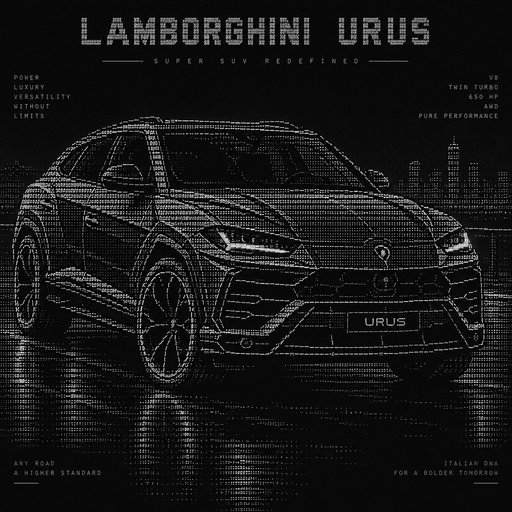
Use ONLY keyboard characters, letters, punctuation marks, and ASCII symbols.

Absolutely NO emojis, NO Unicode box-drawing characters, NO colored square blocks, and NO actual images.

The final result must be a recognizable sports SUV, not a generic car.

Show a front three-quarter view from slightly above, with the front facing toward the right, matching a cinematic automotive photograph.

Use carefully placed characters such as ._-/\|()[]{}=+*#@ to create realistic contours, windows, shadows, wheels, and reflections.

Use spaces intentionally to create depth and perspective.

Keep the car's body wide, the roof sloping, the hood long, and the wheels large.

Add the words "LAMBORGHINI URUS" and subtle decorative text around the vehicle without obscuring the drawing.

Render the final output in a monospaced code block, preserving exact spacing.

Prioritize accurate vehicle proportions and a clean, detailed silhouette over excessive decoration.
Use ONLY keyboard characters, letters, punctuation marks, and ASCII symbols. Absolutely NO emojis, NO Unicode box-drawing characters, NO colored square blocks, and NO actual images. The final result must be a recognizable sports SUV, not a generic car. Show a front three-quarter view from slightly above, with the front facing toward the right, matching a cinematic automotive photograph. Use carefully placed characters such as ._-/\|()[]{}=+*#@ to create realistic contours, windows, shadows, wheels, and reflections. Use spaces intentionally to create depth and perspective. Keep the car's body wide, the roof sloping, the hood long, and the wheels large. Add the words "LAMBORGHINI URUS" and subtle decorative text around the vehicle without obscuring the drawing. Render the final output in a monospaced code block, preserving exact spacing. Prioritize accurate vehicle proportions and a clean, detailed silhouette over excessive decoration.

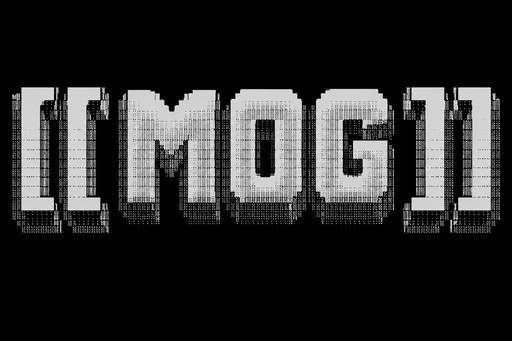
ASCII/ANSI logo for "Mog", a plaintext markup language for interconnected documents
(wikis, knowledge bases). Wordmark: [[ MOG ]]. The double square brackets are Mog's
link syntax, so the logo reads as a link to Mog. Render the brackets as first-class
glyphs, the same height and weight as the letters.

Style: 1990s BBS / TheDraw block art, chunky 3D letterforms. Use only █ ▀ ▄ ▌ ▐ ░ ▒ ▓
plus spaces. Use ░▒▓ shading gradients to give depth and a solid █ frame on the
brackets. Keep it monospace-grid exact: every row the same width, no tabs, at most 120
columns and about 12 rows. Plain and precise, like a technical document. Don't make it
cute or mascot-like.

Output only the art, no caption or extra text.

If the generator outputs color, add this line: Palette: warm dark ground #292522, ink #ece1d7, accent sulfur #ebc53d or orchid #b380b0. Those are the site's melange dark-mode tokens.
ASCII/ANSI logo for "Mog", a plaintext markup language for interconnected documents (wikis, knowledge bases). Wordmark: [[ MOG ]]. The double square brackets are Mog's link syntax, so the logo reads as a link to Mog. Render the brackets as first-class glyphs, the same height and weight as the letters. Style: 1990s BBS / TheDraw block art, chunky 3D letterforms. Use only █ ▀ ▄ ▌ ▐ ░ ▒ ▓ plus spaces. Use ░▒▓ shading gradients to give depth and a solid █ frame on the brackets. Keep it monospace-grid exact: every row the same width, no tabs, at most 120 columns and about 12 rows. Plain and precise, like a technical document. Don't make it cute or mascot-like. Output only the art, no caption or extra text. If the generator outputs color, add this line: Palette: warm dark ground #292522, ink #ece1d7, accent sulfur #ebc53d or orchid #b380b0. Those are the site's melange dark-mode tokens.
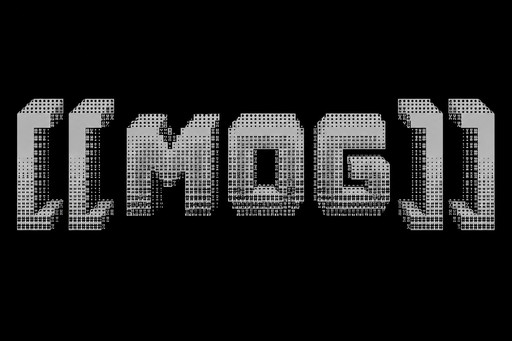
ASCII/ANSI logo for "Mog", a plaintext markup language for interconnected documents
(wikis, knowledge bases). Wordmark: [[ MOG ]]. The double square brackets are Mog's
link syntax, so the logo reads as a link to Mog. Render the brackets as first-class
glyphs, the same height and weight as the letters.

Style: 1990s BBS / TheDraw block art, chunky 3D letterforms. Use only █ ▀ ▄ ▌ ▐ ░ ▒ ▓
plus spaces. Use ░▒▓ shading gradients to give depth and a solid █ frame on the
brackets. Keep it monospace-grid exact: every row the same width, no tabs, at most 120
columns and about 12 rows. Plain and precise, like a technical document. Don't make it
cute or mascot-like.

Output only the art, no caption or extra text.

If the generator outputs color, add this line: Palette: warm dark ground #292522, ink #ece1d7, accent sulfur #ebc53d or orchid #b380b0. Those are the site's melange dark-mode tokens.

ASCII/ANSI logo for "Mog", a plaintext markup language for interconnected documents (wikis, knowledge bases). Wordmark: [[ MOG ]]. The double square brackets are Mog's link syntax, so the logo reads as a link to Mog. Render the brackets as first-class glyphs, the same height and weight as the letters. Style: 1990s BBS / TheDraw block art, chunky 3D letterforms. Use only █ ▀ ▄ ▌ ▐ ░ ▒ ▓ plus spaces. Use ░▒▓ shading gradients to give depth and a solid █ frame on the brackets. Keep it monospace-grid exact: every row the same width, no tabs, at most 120 columns and about 12 rows. Plain and precise, like a technical document. Don't make it cute or mascot-like. Output only the art, no caption or extra text. If the generator outputs color, add this line: Palette: warm dark ground #292522, ink #ece1d7, accent sulfur #ebc53d or orchid #b380b0. Those are the site's melange dark-mode tokens.

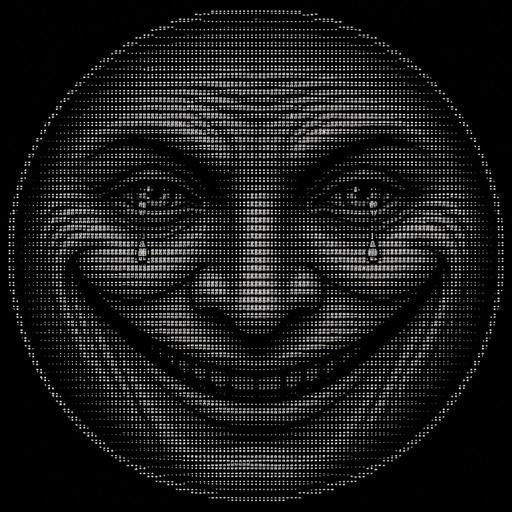
Create a highly detailed ASCII art portrait of Red John from The Mentalist, showing only his iconic smiling face. Make the face a large, perfectly circular shape with no elements extending outside the circle. Use only standard keyboard punctuation and ASCII characters such as . , : ; ' " - _ ( ) [ ] { } / \ | + * # @. The face should be wide rather than tall, with realistic facial proportions, clearly defined eyes, eyebrows, nose, cheeks, and Red John's distinctive wide, unsettling smile. Add 1 or 2 tiny tear drops falling from the eyes. Use dense shading and many different ASCII characters to create realistic depth, shadows, wrinkles, and facial details. Keep everything strictly inside the circular outline. No text, no background, no body, no hair outside the circle, no symbols outside the circle. Maximum 2000 characters. The final result must look like detailed, realistic ASCII art rather than a simple emoticon.
Create a highly detailed ASCII art portrait of Red John from The Mentalist, showing only his iconic smiling face. Make the face a large, perfectly circular shape with no elements extending outside the circle. Use only standard keyboard punctuation and ASCII characters such as . , : ; ' " - _ ( ) [ ] { } / \ | + * # @. The face should be wide rather than tall, with realistic facial proportions, clearly defined eyes, eyebrows, nose, cheeks, and Red John's distinctive wide, unsettling smile. Add 1 or 2 tiny tear drops falling from the eyes. Use dense shading and many different ASCII characters to create realistic depth, shadows, wrinkles, and facial details. Keep everything strictly inside the circular outline. No text, no background, no body, no hair outside the circle, no symbols outside the circle. Maximum 2000 characters. The final result must look like detailed, realistic ASCII art rather than a simple emoticon.

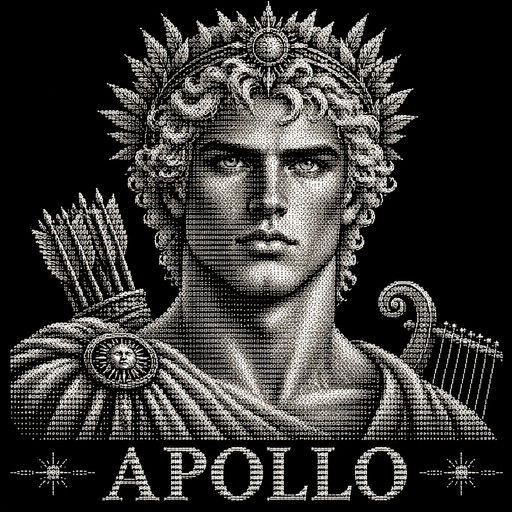
Monochrome ASCII-style portrait of Apollo with a laurel crown and arrows
Monochrome ASCII-style portrait of Apollo with a laurel crown and arrows

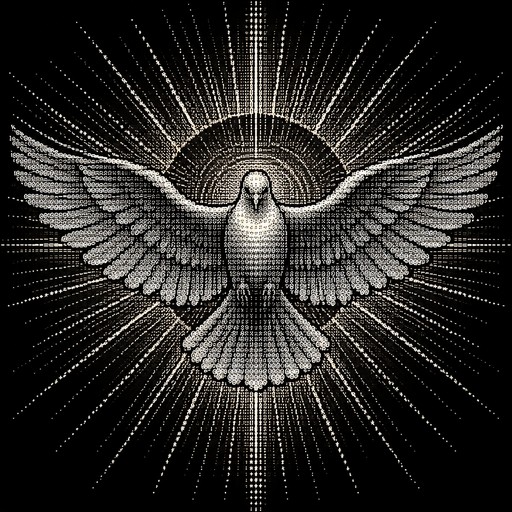
Create a highly detailed, symmetrical ASCII art representation of the Holy Spirit dove featured in Gian Lorenzo Bernini's stained-glass window in the apse of St. Peter's Basilica in Vatican City.

Subject and composition:

A majestic white dove representing the Holy Spirit, seen from the front, with both wings fully extended horizontally.

The wings must be anatomically plausible, elegant, and richly detailed, with individually distinguishable layers of feathers.

The dove's head is centered, slightly tilted downward, with a small beak and a peaceful, sacred expression.

The body is vertical and elongated, with a clearly defined breast and a fan-shaped tail.

A brilliant divine golden-radiance effect surrounds the dove, represented through ASCII characters arranged in concentric halos and long, symmetrical rays radiating outward in every direction.

The overall composition should evoke the monumental Baroque aesthetic of Bernini's original artwork: dramatic, majestic, luminous, and perfectly balanced.

ASCII requirements — absolutely essential:

Output genuine ASCII ART as plain text, NOT an image, NOT a JPEG, NOT a PNG, and NOT SVG.

Use ONLY printable ASCII characters (character codes 32–126).

Permitted characters include: . , : ; ' " ` - _ = + * # % @ / \ | ( ) [ ] { } < >

Use varying character densities to create shadows, highlights, feather textures, and depth.

Construct the entire dove and its surrounding rays directly from ASCII characters.

Do NOT use Unicode, emojis, box-drawing characters, or extended ASCII characters.

Do NOT wrap the artwork in Markdown code fences.

Do NOT include explanations, titles, captions, or any text outside the artwork.

Preserve all spaces and line breaks exactly.

Use a monospaced layout with consistent character spacing.

Make the artwork as large and detailed as possible, ideally 120–160 characters wide and 70–100 lines tall.

Ensure the dove remains recognizable when viewed in a terminal with a black background and white

Create a highly detailed, symmetrical ASCII art representation of the Holy Spirit dove featured in Gian Lorenzo Bernini's stained-glass window in the apse of St. Peter's Basilica in Vatican City. Subject and composition: A majestic white dove representing the Holy Spirit, seen from the front, with both wings fully extended horizontally. The wings must be anatomically plausible, elegant, and richly detailed, with individually distinguishable layers of feathers. The dove's head is centered, slightly tilted downward, with a small beak and a peaceful, sacred expression. The body is vertical and elongated, with a clearly defined breast and a fan-shaped tail. A brilliant divine golden-radiance effect surrounds the dove, represented through ASCII characters arranged in concentric halos and long, symmetrical rays radiating outward in every direction. The overall composition should evoke the monumental Baroque aesthetic of Bernini's original artwork: dramatic, majestic, luminous, and perfectly balanced. ASCII requirements — absolutely essential: Output genuine ASCII ART as plain text, NOT an image, NOT a JPEG, NOT a PNG, and NOT SVG. Use ONLY printable ASCII characters (character codes 32–126). Permitted characters include: . , : ; ' " ` - _ = + * # % @ / \ | ( ) [ ] { } < > Use varying character densities to create shadows, highlights, feather textures, and depth. Construct the entire dove and its surrounding rays directly from ASCII characters. Do NOT use Unicode, emojis, box-drawing characters, or extended ASCII characters. Do NOT wrap the artwork in Markdown code fences. Do NOT include explanations, titles, captions, or any text outside the artwork. Preserve all spaces and line breaks exactly. Use a monospaced layout with consistent character spacing. Make the artwork as large and detailed as possible, ideally 120–160 characters wide and 70–100 lines tall. Ensure the dove remains recognizable when viewed in a terminal with a black background and white
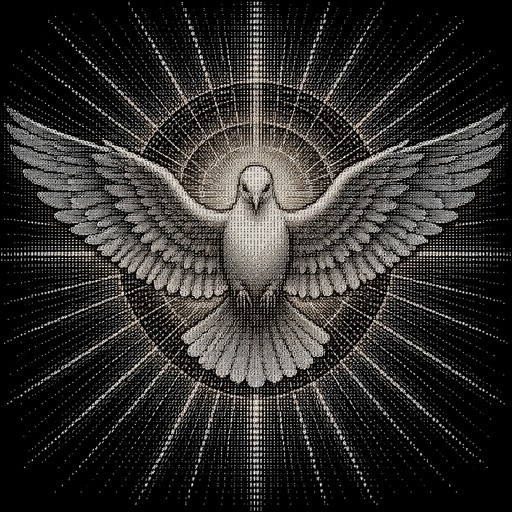
Create a highly detailed, symmetrical ASCII art representation of the Holy Spirit dove featured in Gian Lorenzo Bernini's stained-glass window in the apse of St. Peter's Basilica in Vatican City.

Subject and composition:

A majestic white dove representing the Holy Spirit, seen from the front, with both wings fully extended horizontally.

The wings must be anatomically plausible, elegant, and richly detailed, with individually distinguishable layers of feathers.

The dove's head is centered, slightly tilted downward, with a small beak and a peaceful, sacred expression.

The body is vertical and elongated, with a clearly defined breast and a fan-shaped tail.

A brilliant divine golden-radiance effect surrounds the dove, represented through ASCII characters arranged in concentric halos and long, symmetrical rays radiating outward in every direction.

The overall composition should evoke the monumental Baroque aesthetic of Bernini's original artwork: dramatic, majestic, luminous, and perfectly balanced.

ASCII requirements — absolutely essential:

Output genuine ASCII ART as plain text, NOT an image, NOT a JPEG, NOT a PNG, and NOT SVG.

Use ONLY printable ASCII characters (character codes 32–126).

Permitted characters include: . , : ; ' " ` - _ = + * # % @ / \ | ( ) [ ] { } < >

Use varying character densities to create shadows, highlights, feather textures, and depth.

Construct the entire dove and its surrounding rays directly from ASCII characters.

Do NOT use Unicode, emojis, box-drawing characters, or extended ASCII characters.

Do NOT wrap the artwork in Markdown code fences.

Do NOT include explanations, titles, captions, or any text outside the artwork.

Preserve all spaces and line breaks exactly.

Use a monospaced layout with consistent character spacing.

Make the artwork as large and detailed as possible, ideally 120–160 characters wide and 70–100 lines tall.

Ensure the dove remains recognizable when viewed in a terminal with a black background and white

Create a highly detailed, symmetrical ASCII art representation of the Holy Spirit dove featured in Gian Lorenzo Bernini's stained-glass window in the apse of St. Peter's Basilica in Vatican City. Subject and composition: A majestic white dove representing the Holy Spirit, seen from the front, with both wings fully extended horizontally. The wings must be anatomically plausible, elegant, and richly detailed, with individually distinguishable layers of feathers. The dove's head is centered, slightly tilted downward, with a small beak and a peaceful, sacred expression. The body is vertical and elongated, with a clearly defined breast and a fan-shaped tail. A brilliant divine golden-radiance effect surrounds the dove, represented through ASCII characters arranged in concentric halos and long, symmetrical rays radiating outward in every direction. The overall composition should evoke the monumental Baroque aesthetic of Bernini's original artwork: dramatic, majestic, luminous, and perfectly balanced. ASCII requirements — absolutely essential: Output genuine ASCII ART as plain text, NOT an image, NOT a JPEG, NOT a PNG, and NOT SVG. Use ONLY printable ASCII characters (character codes 32–126). Permitted characters include: . , : ; ' " ` - _ = + * # % @ / \ | ( ) [ ] { } < > Use varying character densities to create shadows, highlights, feather textures, and depth. Construct the entire dove and its surrounding rays directly from ASCII characters. Do NOT use Unicode, emojis, box-drawing characters, or extended ASCII characters. Do NOT wrap the artwork in Markdown code fences. Do NOT include explanations, titles, captions, or any text outside the artwork. Preserve all spaces and line breaks exactly. Use a monospaced layout with consistent character spacing. Make the artwork as large and detailed as possible, ideally 120–160 characters wide and 70–100 lines tall. Ensure the dove remains recognizable when viewed in a terminal with a black background and white
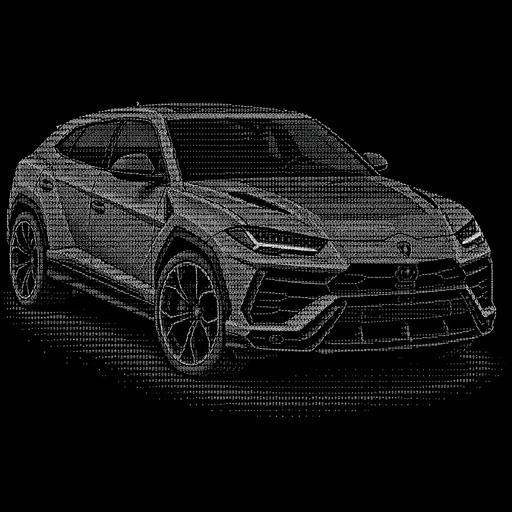
Create an ultra-realistic, highly detailed graphite pencil drawing of a Lamborghini Urus Performante, using the exact proportions and aggressive styling of the real luxury SUV.

Camera angle and composition: Front three-quarter view from a slightly elevated angle, with the front of the car facing toward the right side of the page. Show the entire vehicle, including its sloping roofline, muscular bodywork, wide stance, angular hood, sharp LED headlights, large black alloy wheels, side mirrors, sculpted doors, and distinctive front air intakes.

Drawing style: Traditional hand-drawn pencil art on clean white drawing paper. Use fine graphite lines, delicate cross-hatching, layered pencil strokes, realistic shading, soft smudging, and carefully rendered reflections to create convincing depth, metallic surfaces, glass, rubber, and shadows. Make the drawing look like the work of a highly skilled automotive artist using professional graphite pencils.

Accuracy: Preserve the recognizable Lamborghini Urus silhouette, correct wheel proportions, realistic perspective, precise body panel lines, and intricate wheel spokes. The vehicle must look like a real Lamborghini Urus, not a generic SUV.

Color and materials: Strictly monochrome black, white, and graphite gray. No paint, no color, no digital coloring. The yellow bodywork from the reference should be represented entirely through pencil shading and highlights.

Background: Plain white sketchbook paper with subtle paper grain, a soft realistic ground shadow beneath the tires, and a few faint construction lines that give the artwork an authentic hand-drawn appearance.

Quality: Extremely detailed, photorealistic pencil rendering, crisp contours, refined tonal gradients, realistic reflections, professional automotive concept art, natural graphite texture, museum-quality drawing.

Important restrictions: The final result must look genuinely drawn by hand with a pencil on paper, not a photograph, not a 3D render, not a digital pai

Create an ultra-realistic, highly detailed graphite pencil drawing of a Lamborghini Urus Performante, using the exact proportions and aggressive styling of the real luxury SUV. Camera angle and composition: Front three-quarter view from a slightly elevated angle, with the front of the car facing toward the right side of the page. Show the entire vehicle, including its sloping roofline, muscular bodywork, wide stance, angular hood, sharp LED headlights, large black alloy wheels, side mirrors, sculpted doors, and distinctive front air intakes. Drawing style: Traditional hand-drawn pencil art on clean white drawing paper. Use fine graphite lines, delicate cross-hatching, layered pencil strokes, realistic shading, soft smudging, and carefully rendered reflections to create convincing depth, metallic surfaces, glass, rubber, and shadows. Make the drawing look like the work of a highly skilled automotive artist using professional graphite pencils. Accuracy: Preserve the recognizable Lamborghini Urus silhouette, correct wheel proportions, realistic perspective, precise body panel lines, and intricate wheel spokes. The vehicle must look like a real Lamborghini Urus, not a generic SUV. Color and materials: Strictly monochrome black, white, and graphite gray. No paint, no color, no digital coloring. The yellow bodywork from the reference should be represented entirely through pencil shading and highlights. Background: Plain white sketchbook paper with subtle paper grain, a soft realistic ground shadow beneath the tires, and a few faint construction lines that give the artwork an authentic hand-drawn appearance. Quality: Extremely detailed, photorealistic pencil rendering, crisp contours, refined tonal gradients, realistic reflections, professional automotive concept art, natural graphite texture, museum-quality drawing. Important restrictions: The final result must look genuinely drawn by hand with a pencil on paper, not a photograph, not a 3D render, not a digital pai