More from the community

Absolute cinema guy
Absolute cinema guy

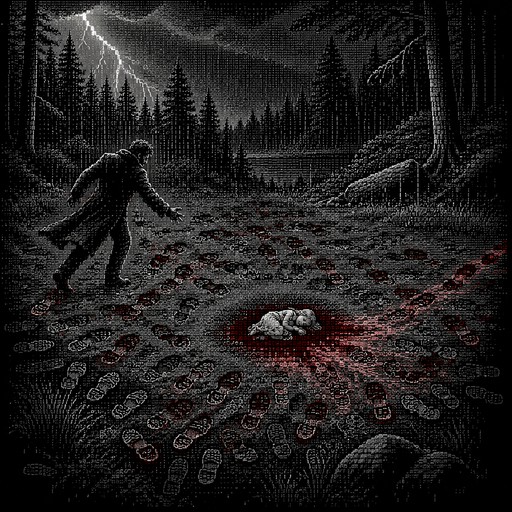
ASCII art illustration, entire image rendered in monospace text characters on a near-black background (#050507). Wide shot of a forest hollow at the exact moment of a lightning flash.

COMPOSITION: lit as if mid-flash: a lightning strike from the upper left, the whole image lifted in brightness for one frozen instant, light falling off into total darkness at all four edges.

CENTER-LOW: a small child's body lying in the wet grass, a small compact cluster of characters, curled slightly as if asleep, completely still, unmarked. Beneath and around her, a large dark rust-red stain soaked deep into the grass, dense wine-dark characters (#5c1f1f) at its center, edges fringed with paler rose and pink streaks spreading downhill where hours of rain have washed and thinned it outward.

THE TRAIL: a broken line of dark rust-red smears and scattered drops leading in from the right frame edge toward her, half-washed by rain, thick in places, gone in others.

THE FOOTPRINTS - THE CENTER OF THE IMAGE: not a path, a frenzy. Dozens upon dozens of overlapping boot prints covering the whole clearing in every direction: contradicted headings, prints crossing at all angles, short frantic stride clusters, scuffed double-prints where he spun in place, tracks doubling back on themselves, stamped three and four deep on top of each other. Some prints are plain gray mud; many are rimmed and stained dark red where they tear through the rust-colored trail. The pattern is chaos, a mind blurred and spiraling. One absolute rule: a clean VOID of untouched ground around her body - not one print reaches her, not one touches the inner edge of the stain. Every print swerves away. He walked everywhere in this clearing except to her. His current stride, mid-frame left, is the FIRST track in the entire image that actually points at her.

THE FATHER, mid-frame left: a dense dark silhouette, frozen mid-stride, body folding forward, one arm half-raised reaching toward her, hand open, hood fallen back, long t
ASCII art illustration, entire image rendered in monospace text characters on a near-black background (#050507). Wide shot of a forest hollow at the exact moment of a lightning flash. COMPOSITION: lit as if mid-flash: a lightning strike from the upper left, the whole image lifted in brightness for one frozen instant, light falling off into total darkness at all four edges. CENTER-LOW: a small child's body lying in the wet grass, a small compact cluster of characters, curled slightly as if asleep, completely still, unmarked. Beneath and around her, a large dark rust-red stain soaked deep into the grass, dense wine-dark characters (#5c1f1f) at its center, edges fringed with paler rose and pink streaks spreading downhill where hours of rain have washed and thinned it outward. THE TRAIL: a broken line of dark rust-red smears and scattered drops leading in from the right frame edge toward her, half-washed by rain, thick in places, gone in others. THE FOOTPRINTS - THE CENTER OF THE IMAGE: not a path, a frenzy. Dozens upon dozens of overlapping boot prints covering the whole clearing in every direction: contradicted headings, prints crossing at all angles, short frantic stride clusters, scuffed double-prints where he spun in place, tracks doubling back on themselves, stamped three and four deep on top of each other. Some prints are plain gray mud; many are rimmed and stained dark red where they tear through the rust-colored trail. The pattern is chaos, a mind blurred and spiraling. One absolute rule: a clean VOID of untouched ground around her body - not one print reaches her, not one touches the inner edge of the stain. Every print swerves away. He walked everywhere in this clearing except to her. His current stride, mid-frame left, is the FIRST track in the entire image that actually points at her. THE FATHER, mid-frame left: a dense dark silhouette, frozen mid-stride, body folding forward, one arm half-raised reaching toward her, hand open, hood fallen back, long t

Use ONLY keyboard characters, letters, punctuation marks, and ASCII symbols.

Absolutely NO emojis, NO Unicode box-drawing characters, NO colored square blocks, and NO actual images.

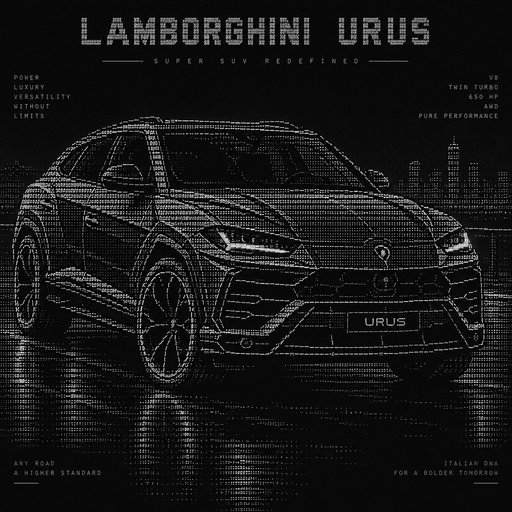
The final result must be a recognizable sports SUV, not a generic car.

Show a front three-quarter view from slightly above, with the front facing toward the right, matching a cinematic automotive photograph.

Use carefully placed characters such as ._-/\|()[]{}=+*#@ to create realistic contours, windows, shadows, wheels, and reflections.

Use spaces intentionally to create depth and perspective.

Keep the car's body wide, the roof sloping, the hood long, and the wheels large.

Add the words "LAMBORGHINI URUS" and subtle decorative text around the vehicle without obscuring the drawing.

Render the final output in a monospaced code block, preserving exact spacing.

Prioritize accurate vehicle proportions and a clean, detailed silhouette over excessive decoration.
Use ONLY keyboard characters, letters, punctuation marks, and ASCII symbols. Absolutely NO emojis, NO Unicode box-drawing characters, NO colored square blocks, and NO actual images. The final result must be a recognizable sports SUV, not a generic car. Show a front three-quarter view from slightly above, with the front facing toward the right, matching a cinematic automotive photograph. Use carefully placed characters such as ._-/\|()[]{}=+*#@ to create realistic contours, windows, shadows, wheels, and reflections. Use spaces intentionally to create depth and perspective. Keep the car's body wide, the roof sloping, the hood long, and the wheels large. Add the words "LAMBORGHINI URUS" and subtle decorative text around the vehicle without obscuring the drawing. Render the final output in a monospaced code block, preserving exact spacing. Prioritize accurate vehicle proportions and a clean, detailed silhouette over excessive decoration.

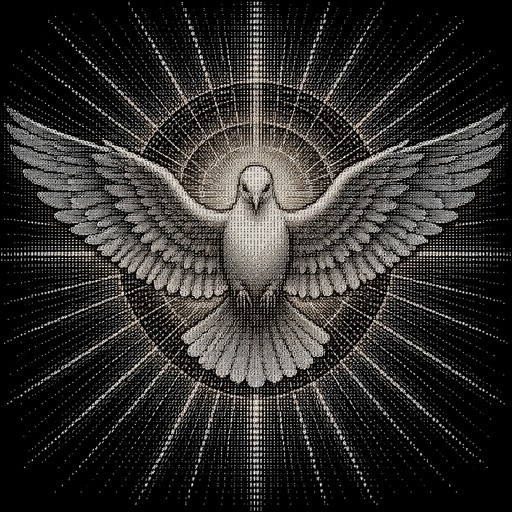
Create a highly detailed, symmetrical ASCII art representation of the Holy Spirit dove featured in Gian Lorenzo Bernini's stained-glass window in the apse of St. Peter's Basilica in Vatican City.

Subject and composition:

A majestic white dove representing the Holy Spirit, seen from the front, with both wings fully extended horizontally.

The wings must be anatomically plausible, elegant, and richly detailed, with individually distinguishable layers of feathers.

The dove's head is centered, slightly tilted downward, with a small beak and a peaceful, sacred expression.

The body is vertical and elongated, with a clearly defined breast and a fan-shaped tail.

A brilliant divine golden-radiance effect surrounds the dove, represented through ASCII characters arranged in concentric halos and long, symmetrical rays radiating outward in every direction.

The overall composition should evoke the monumental Baroque aesthetic of Bernini's original artwork: dramatic, majestic, luminous, and perfectly balanced.

ASCII requirements — absolutely essential:

Output genuine ASCII ART as plain text, NOT an image, NOT a JPEG, NOT a PNG, and NOT SVG.

Use ONLY printable ASCII characters (character codes 32–126).

Permitted characters include: . , : ; ' " ` - _ = + * # % @ / \ | ( ) [ ] { } < >

Use varying character densities to create shadows, highlights, feather textures, and depth.

Construct the entire dove and its surrounding rays directly from ASCII characters.

Do NOT use Unicode, emojis, box-drawing characters, or extended ASCII characters.

Do NOT wrap the artwork in Markdown code fences.

Do NOT include explanations, titles, captions, or any text outside the artwork.

Preserve all spaces and line breaks exactly.

Use a monospaced layout with consistent character spacing.

Make the artwork as large and detailed as possible, ideally 120–160 characters wide and 70–100 lines tall.

Ensure the dove remains recognizable when viewed in a terminal with a black background and white

Create a highly detailed, symmetrical ASCII art representation of the Holy Spirit dove featured in Gian Lorenzo Bernini's stained-glass window in the apse of St. Peter's Basilica in Vatican City. Subject and composition: A majestic white dove representing the Holy Spirit, seen from the front, with both wings fully extended horizontally. The wings must be anatomically plausible, elegant, and richly detailed, with individually distinguishable layers of feathers. The dove's head is centered, slightly tilted downward, with a small beak and a peaceful, sacred expression. The body is vertical and elongated, with a clearly defined breast and a fan-shaped tail. A brilliant divine golden-radiance effect surrounds the dove, represented through ASCII characters arranged in concentric halos and long, symmetrical rays radiating outward in every direction. The overall composition should evoke the monumental Baroque aesthetic of Bernini's original artwork: dramatic, majestic, luminous, and perfectly balanced. ASCII requirements — absolutely essential: Output genuine ASCII ART as plain text, NOT an image, NOT a JPEG, NOT a PNG, and NOT SVG. Use ONLY printable ASCII characters (character codes 32–126). Permitted characters include: . , : ; ' " ` - _ = + * # % @ / \ | ( ) [ ] { } < > Use varying character densities to create shadows, highlights, feather textures, and depth. Construct the entire dove and its surrounding rays directly from ASCII characters. Do NOT use Unicode, emojis, box-drawing characters, or extended ASCII characters. Do NOT wrap the artwork in Markdown code fences. Do NOT include explanations, titles, captions, or any text outside the artwork. Preserve all spaces and line breaks exactly. Use a monospaced layout with consistent character spacing. Make the artwork as large and detailed as possible, ideally 120–160 characters wide and 70–100 lines tall. Ensure the dove remains recognizable when viewed in a terminal with a black background and white
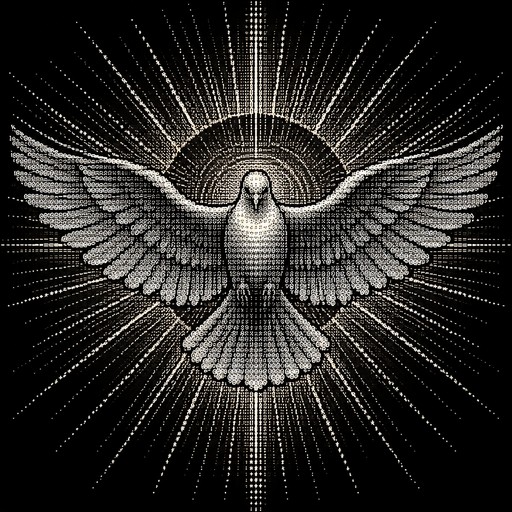
Create a highly detailed, symmetrical ASCII art representation of the Holy Spirit dove featured in Gian Lorenzo Bernini's stained-glass window in the apse of St. Peter's Basilica in Vatican City.

Subject and composition:

A majestic white dove representing the Holy Spirit, seen from the front, with both wings fully extended horizontally.

The wings must be anatomically plausible, elegant, and richly detailed, with individually distinguishable layers of feathers.

The dove's head is centered, slightly tilted downward, with a small beak and a peaceful, sacred expression.

The body is vertical and elongated, with a clearly defined breast and a fan-shaped tail.

A brilliant divine golden-radiance effect surrounds the dove, represented through ASCII characters arranged in concentric halos and long, symmetrical rays radiating outward in every direction.

The overall composition should evoke the monumental Baroque aesthetic of Bernini's original artwork: dramatic, majestic, luminous, and perfectly balanced.

ASCII requirements — absolutely essential:

Output genuine ASCII ART as plain text, NOT an image, NOT a JPEG, NOT a PNG, and NOT SVG.

Use ONLY printable ASCII characters (character codes 32–126).

Permitted characters include: . , : ; ' " ` - _ = + * # % @ / \ | ( ) [ ] { } < >

Use varying character densities to create shadows, highlights, feather textures, and depth.

Construct the entire dove and its surrounding rays directly from ASCII characters.

Do NOT use Unicode, emojis, box-drawing characters, or extended ASCII characters.

Do NOT wrap the artwork in Markdown code fences.

Do NOT include explanations, titles, captions, or any text outside the artwork.

Preserve all spaces and line breaks exactly.

Use a monospaced layout with consistent character spacing.

Make the artwork as large and detailed as possible, ideally 120–160 characters wide and 70–100 lines tall.

Ensure the dove remains recognizable when viewed in a terminal with a black background and white

Create a highly detailed, symmetrical ASCII art representation of the Holy Spirit dove featured in Gian Lorenzo Bernini's stained-glass window in the apse of St. Peter's Basilica in Vatican City. Subject and composition: A majestic white dove representing the Holy Spirit, seen from the front, with both wings fully extended horizontally. The wings must be anatomically plausible, elegant, and richly detailed, with individually distinguishable layers of feathers. The dove's head is centered, slightly tilted downward, with a small beak and a peaceful, sacred expression. The body is vertical and elongated, with a clearly defined breast and a fan-shaped tail. A brilliant divine golden-radiance effect surrounds the dove, represented through ASCII characters arranged in concentric halos and long, symmetrical rays radiating outward in every direction. The overall composition should evoke the monumental Baroque aesthetic of Bernini's original artwork: dramatic, majestic, luminous, and perfectly balanced. ASCII requirements — absolutely essential: Output genuine ASCII ART as plain text, NOT an image, NOT a JPEG, NOT a PNG, and NOT SVG. Use ONLY printable ASCII characters (character codes 32–126). Permitted characters include: . , : ; ' " ` - _ = + * # % @ / \ | ( ) [ ] { } < > Use varying character densities to create shadows, highlights, feather textures, and depth. Construct the entire dove and its surrounding rays directly from ASCII characters. Do NOT use Unicode, emojis, box-drawing characters, or extended ASCII characters. Do NOT wrap the artwork in Markdown code fences. Do NOT include explanations, titles, captions, or any text outside the artwork. Preserve all spaces and line breaks exactly. Use a monospaced layout with consistent character spacing. Make the artwork as large and detailed as possible, ideally 120–160 characters wide and 70–100 lines tall. Ensure the dove remains recognizable when viewed in a terminal with a black background and white
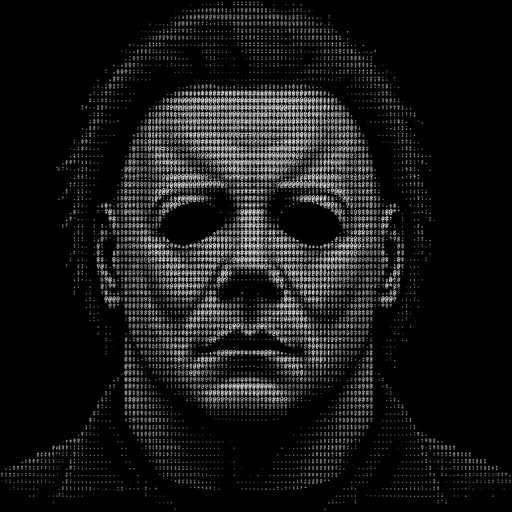
Create a highly detailed, front-facing portrait of Michael Myers wearing his classic white William Shatner-style mask from Halloween (1978).

The mask must be viewed **directly from the front**, perfectly centered and symmetrical, looking straight at the camera. No head tilt, no side angle, no three-quarter view, no perspective distortion.

Show **only the mask and a very small portion of the shoulders** beneath it. The shoulders should be subtle and secondary to the mask.

The expression should be the classic emotionless, blank, unsettling Michael Myers expression: hollow dark eye openings, subtle aged skin texture on the mask, slightly weathered and imperfect surface, realistic mask proportions.

Plain dark background with no objects, no scenery, no decorations, no weapons, no blood, no text, no logo.

Cinematic low-key lighting, high contrast, sharp facial details, centered composition, straight-on camera, symmetrical framing.

The mask itself is the **only focal point**.

Create a highly detailed, front-facing portrait of Michael Myers wearing his classic white William Shatner-style mask from Halloween (1978). The mask must be viewed **directly from the front**, perfectly centered and symmetrical, looking straight at the camera. No head tilt, no side angle, no three-quarter view, no perspective distortion. Show **only the mask and a very small portion of the shoulders** beneath it. The shoulders should be subtle and secondary to the mask. The expression should be the classic emotionless, blank, unsettling Michael Myers expression: hollow dark eye openings, subtle aged skin texture on the mask, slightly weathered and imperfect surface, realistic mask proportions. Plain dark background with no objects, no scenery, no decorations, no weapons, no blood, no text, no logo. Cinematic low-key lighting, high contrast, sharp facial details, centered composition, straight-on camera, symmetrical framing. The mask itself is the **only focal point**.
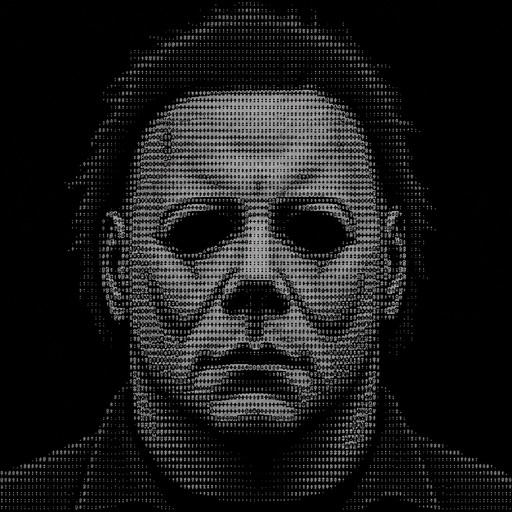
Create a highly detailed, front-facing portrait of Michael Myers wearing his classic white William Shatner-style mask from Halloween (1978).

The mask must be viewed **directly from the front**, perfectly centered and symmetrical, looking straight at the camera. No head tilt, no side angle, no three-quarter view, no perspective distortion.

Show **only the mask and a very small portion of the shoulders** beneath it. The shoulders should be subtle and secondary to the mask.

The expression should be the classic emotionless, blank, unsettling Michael Myers expression: hollow dark eye openings, subtle aged skin texture on the mask, slightly weathered and imperfect surface, realistic mask proportions.

Plain dark background with no objects, no scenery, no decorations, no weapons, no blood, no text, no logo.

Cinematic low-key lighting, high contrast, sharp facial details, centered composition, straight-on camera, symmetrical framing.

The mask itself is the **only focal point**.

Create a highly detailed, front-facing portrait of Michael Myers wearing his classic white William Shatner-style mask from Halloween (1978). The mask must be viewed **directly from the front**, perfectly centered and symmetrical, looking straight at the camera. No head tilt, no side angle, no three-quarter view, no perspective distortion. Show **only the mask and a very small portion of the shoulders** beneath it. The shoulders should be subtle and secondary to the mask. The expression should be the classic emotionless, blank, unsettling Michael Myers expression: hollow dark eye openings, subtle aged skin texture on the mask, slightly weathered and imperfect surface, realistic mask proportions. Plain dark background with no objects, no scenery, no decorations, no weapons, no blood, no text, no logo. Cinematic low-key lighting, high contrast, sharp facial details, centered composition, straight-on camera, symmetrical framing. The mask itself is the **only focal point**.